Research-Practice Partnership
SoCal LiNK
A Research-Practice Partnership
SoCal LiNK is a strong example of a Research-Practice Partnership (RPP) between the University of California, San Diego (UCSD), Learner-Centered Collaborative (LCC), and ten Southern California learner-centered educational districts, schools, and educational organizations.
Research-Practice Partnerships are long-term collaborations intentionally organized to connect diverse forms of expertise with the goal of producing actionable knowledge through research. As we strive to put learners at the center by design, this collective partners UCSD researchers with LCC and practitioners in the field in answering our most pressing questions, mobilizing knowledge for the benefit of all.
Below you can explore how research informed the work of SoCal LiNK in 2025-2026 and ways in which the Learner-Centered Collaborative and southern California educators partner to put that into practice.

New Research Supports Ecosystem Approach
During the 2025-2026 SoCal LiNK experience, participants learned about new research from Fine, Rincón-Gallardo, and Fullan that suggests successful learner-centered transformation requires four key elements: shared vision, systemness, symmetry, and steady work. These four elements are deeply embedded in the ecosystem approach at the Learner-Centered Collaborative and evident in the work of SoCal LiNK participants this year.
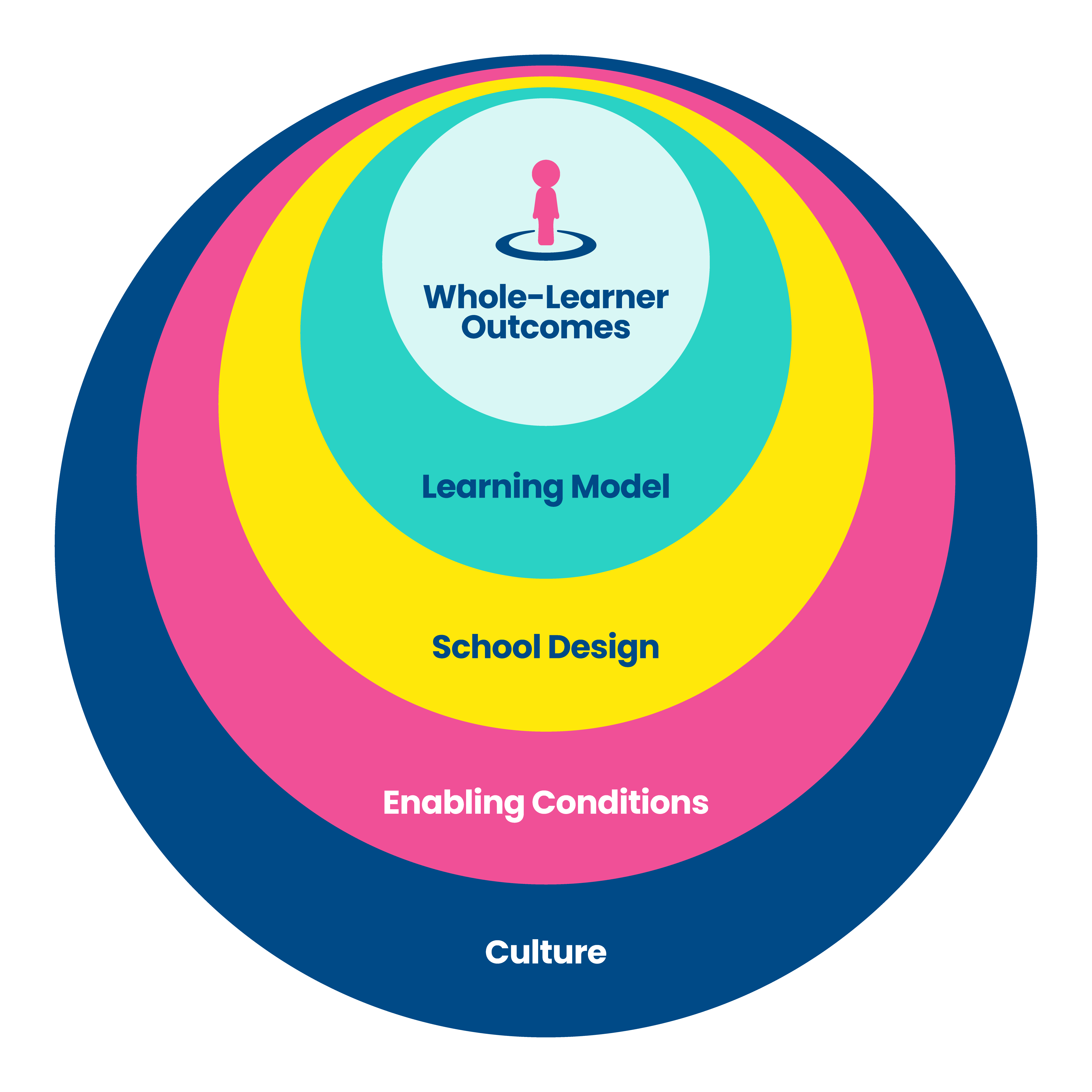
Each school system establishes a co-created, compelling, clear, and coherent vision for education.
A culture of collective responsibility and interconnectedness across all levels of the education system.
Leadership at every level models the values and practices expected in classrooms and schools.
Transformation becomes a long-term commitment rather than a quick fix through continuous improvement.
A Shared Vision Clarifies the Ecosystem's Purpose
Research
Shared Vision
Each school system establishes a co-created, compelling, clear, and coherent vision for education. Stakeholder engagement—including educators, students, families, and community members—plays a crucial role in defining and sustaining these visions.
Key Characteristics
- Co-created with stakeholders including students, families, and community
- Clear and compelling enough to guide daily decisions
- Coherent across all parts of the system
Practice
Shared Vision in Action
e3 Civic High School
Actualizing a Vision Across the System
e3 Civic High School's vision is developing engaged, empowered, and educated youth who are ready for the future: college, career, and life. Bringing students' Life Plans to life requires deep alignment and intentional effort across e3's learning ecosystem so that students don't just know the blueprint, but experience it.
“A strength of e3 is their coherent implementation of a vision that, at the end of the day, changes outcomes for children.”Read full story
Partnership
Learner-Centered's Approach to Shared Vision
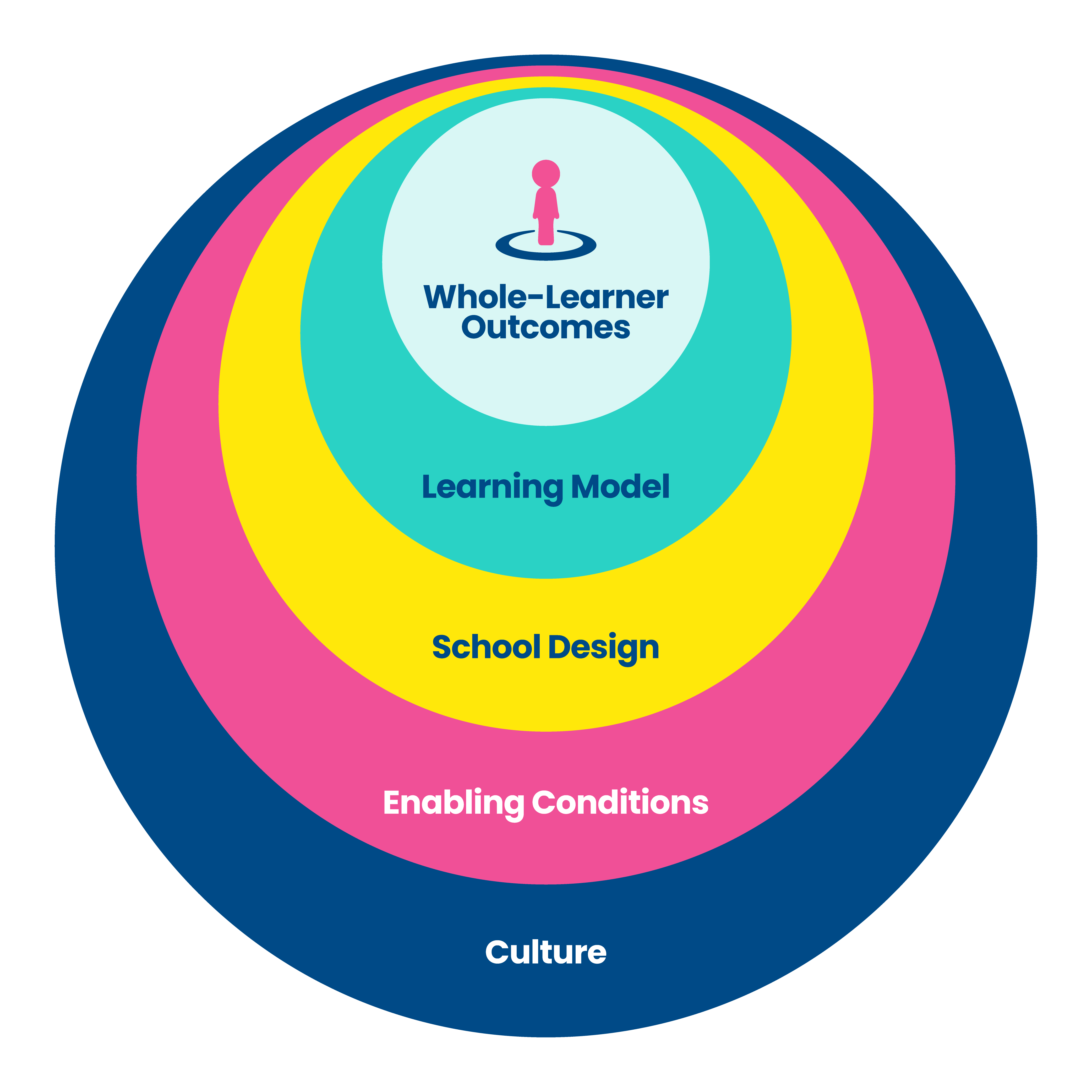
At LCC we empower educators and communities to bring a shared vision for learning to life. We start visioning work by guiding the community to clearly:
- Define whole-learner outcomes
- Identify a learning model, aligning educator mindsets, learning community design, and learning experiences
- Craft a blueprint—a 3-5 year plan with big moves and clear metrics for success
Together the outcomes, learning model, and blueprint create a clear north star to guide future action.
Systemness Aligns the Ecosystem's Parts
Research
Systemness
A culture of collective responsibility and interconnectedness across all levels of the education system are intentionally cultivated, ensuring alignment between classroom practices and district-level strategies. Put simply, all parts pulled in the same direction.
Key Characteristics
- Collective responsibility across all levels
- Alignment between classroom and district strategies
- All parts pulling in the same direction
Practice
Systemness in Action
Sweetwater Union High School District
Whole Child and Whole District Learning
Sweetwater Union demonstrates systemness through their three-part Community of Practice series that integrates SEL, MTSS, and Community Schools into a coherent whole-child approach. What began as a grant for 12 schools has grown into a districtwide understanding that coherence across initiatives is essential.
“District departments have partnered with school teams to elevate strengths already in place and link them to a broader whole-child lens.”Read full story
Partnership
Learner-Centered's Approach to Systemness
At LCC, we partner with schools, districts, and educational organizations to build coherence around a shared vision for learning. We help align systems, structures, partnerships, and instructional practices so all parts of the system move in the same direction. This includes:
- Increasing coherence and commitment across the system
- Aligning systems, talent, and professional growth
- Building partnerships that support the shared vision
Systemness creates coherence across policies, adult learning, structures, and classroom experiences in support of learners.
Symmetry Aligns Experiences Within the Ecosystem
Research
Symmetry
Leadership at every level models the values and practices expected in classrooms and schools, fostering coherence and reinforcing the importance of relational, learner-centered education.
Key Characteristics
- Leadership models expected values and practices
- Coherence between what we say and what we do
- Relational, student-centered approach at every level
Practice
Symmetry in Action
National School District
Aligning Leadership and the Learner Profile
National School District exemplifies symmetry through their collaborative leadership model. Principals write goals in their leadership dashboard and collaborate in cohorts every other week to reflect on progress—a process that mirrors the teacher professional learning framework used across the district.
“This independent yet collaborative process mirrors the teacher professional learning framework used by the district.”Read full story
Partnership
Learner-Centered's Approach to Symmetry
At LCC, we partner with schools, districts, and educational organizations to align how adults and students experience learning. We design professional learning, leadership practices, and systems that reflect the same learner-centered approaches educators use with students. This includes:
- Creating professional learning experiences aligned to the Learning Model
- Ensuring educators experience the same approaches they use with learners
- Building coherence between adult and student experiences
Symmetry reinforces learner-centered mindsets and practices across the system.
Steady Work Sustains the Ecosystem Over Time
Research
Steady Work
Transformation is achieved through long-term commitment rather than short-term initiatives. Successful districts focus on continuous improvement, refining their approaches over time, and resisting the lure of quick-fix solutions.
Key Characteristics
- Long-term commitment over quick fixes
- Continuous improvement through iteration
- Patience and persistence in the face of challenges
Practice
Steady Work in Action
Guajome Park Academy
Backwards Design Across the System
Guajome exemplifies steady work through their patient, iterative approach to rebuilding backwards design practices post-COVID. Starting with a focus team who trained cross-grade cohorts, they embedded Understanding by Design into the evaluation process and created ongoing learning structures that ensure sustainable growth.
“Their process brings learners at every level together to ensure not that teachers have taught, but that students have learned.”Read full story
Partnership
Learner-Centered's Approach to Steady Work
At LCC, we partner with schools, districts, and educational organizations to support lasting change through continuous improvement. We help systems build the conditions and practices needed to learn, adapt, and grow over time. This includes:
- Ongoing care and attention to the ecosystem
- Maintaining a continuous visioning and improvement process
- Adapting and refining the system as it evolves
Steady work sustains transformation through ongoing learning, adaptation, and refinement.
Network Research Informs an Ecosystem Approach
Want to learn more about the value of pairing research and practice in partnership to develop actionable knowledge? Check out “Beyond One-Way Streets: Building Reciprocal Networks for Educational Change”.
Want to learn more about why an ecosystem approach is crucial and why partnerships between organizations are not enough – that what really matters is the partnerships between individuals in those organizations? Check out “The Human Side of Knowledge Networks: Why Individual Connections Drive Educational Change”.
Want to learn more about why weak ties in social networks are important? Close relationships are important for impact, but broad networks of weaker relationships drive innovation. Check out “The Network Paradox: Balancing Breadth and Depth in Educational Change”.